

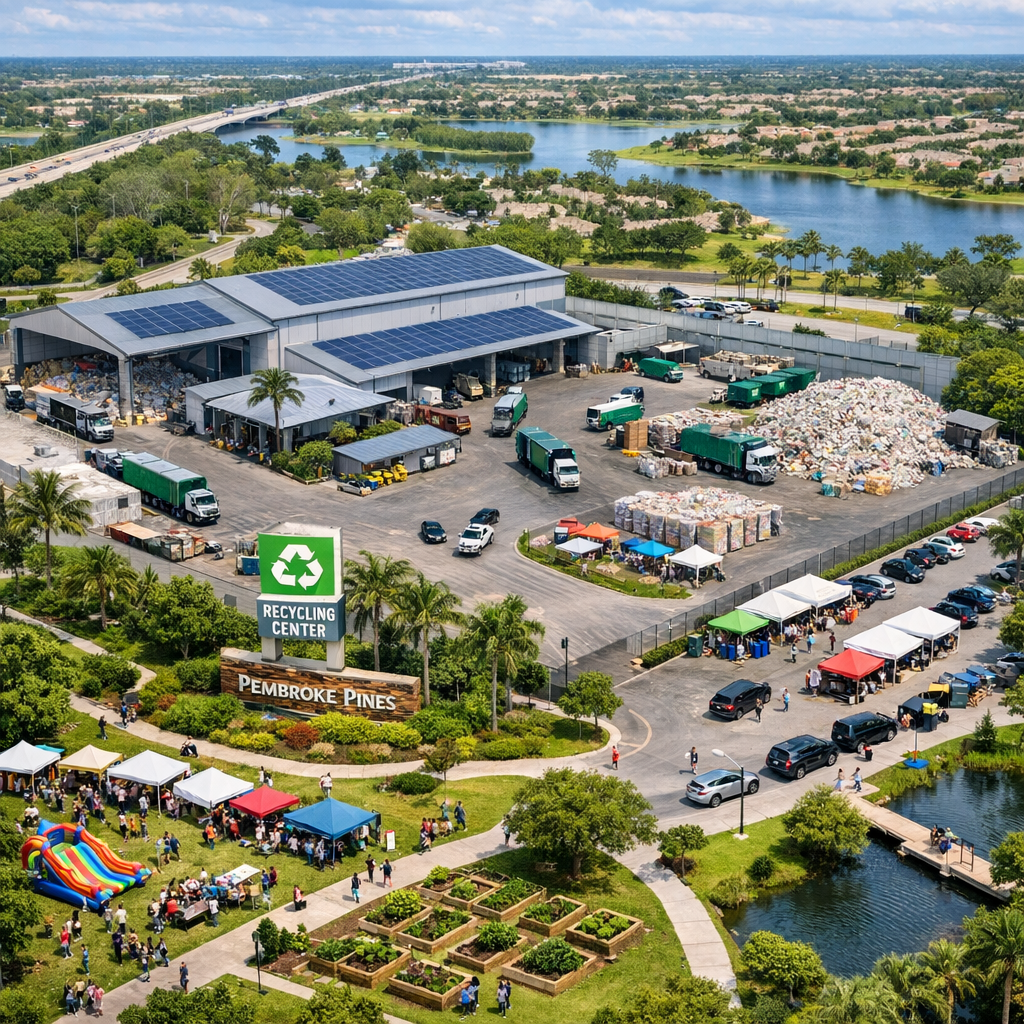
Pembroke Pines is making significant strides in environmental sustainability through the introduction of a state-of-the-art recycling facility and the implementation of comprehensive green initiatives.
State-of-the-Art Recycling Facility
In February 2026, Waste Management (WM) unveiled a $90 million, 127,000-square-foot material recovery facility (MRF) in Pembroke Pines. This advanced facility is designed to process approximately 275,000 tons of recyclable materials annually, serving households across Miami-Dade, Broward, Monroe, and Collier counties. Equipped with cutting-edge technology, including artificial intelligence-powered optical sorters, the MRF aims to increase recycling volumes and reduce contamination rates in the region. This development is particularly timely, as some municipalities have previously scaled back recycling programs due to economic challenges. The new facility is expected to revitalize these programs and promote sustainable waste management practices. Source
Community Engagement and Environmental Education
In conjunction with the facility’s launch, WM collaborated with students from Pembroke Pines Charter High School to establish a microhabitat on the facility’s grounds. This initiative involved planting nearly 750 native trees, shrubs, wildflowers, and grasses in a 2,000-square-foot area, creating a biodiverse ecosystem that supports local wildlife and enhances the region’s natural biodiversity. Such projects underscore the importance of community involvement in environmental stewardship and provide educational opportunities for students to engage in sustainable practices. Source
City’s Green Plan and Sustainability Goals
The City of Pembroke Pines is committed to sustainability through its Green Plan, a comprehensive roadmap for environmental action and community engagement. This plan outlines strategies that conserve natural resources, reduce waste and pollution, promote energy efficiency, encourage sustainable business and development practices, and educate residents on environmental stewardship. Focus areas include protecting and enhancing green spaces, promoting water conservation through efficient irrigation and Naturescape practices, reducing energy use in homes and city facilities, limiting harmful materials to promote healthy indoor air, implementing waste reduction strategies, and engaging the community through education and connection to sustainability programs. Source
Environmental Advisory Board
To further support these initiatives, the city has established an Environmental Advisory Board (EAB). Composed of professionals from various fields, the EAB provides advice and counsel to the City Commission on environmental protection and conservation. Their responsibilities include reviewing and advising on community-supported agricultural initiatives, alternate transportation options, wildlife habitats, conservation strategies, renewable energy, energy efficiency, and promoting projects that beautify and improve the city’s aesthetic. Source
Through these concerted efforts, Pembroke Pines is demonstrating a strong commitment to environmental sustainability, fostering a cleaner, greener, and more resilient community for current and future generations.