

By Mason Torres
Pembroke Pines is more than a residential haven—it’s a city actively shaping its business future. From streamlined permitting to big industrial investments, local leaders are laying the groundwork for entrepreneurship, job growth, and a diversified economy. Here’s what business owners and community-minded residents should know.
Streamlining the Path for Business
The Planning & Economic Development Department plays a central role in making the city friendlier to business. Early in its process, the City introduced the Development HUB and updated its online permitting software (EnerGov), so that applications for zoning, building, and development can be submitted and tracked online. This improves transparency and responsiveness for entrepreneurs navigating red tape.
Also, with Pembroke Pines designated a “Platinum Permitting City,” local businesses get fast-tracked in approvals thanks to online permit tracking tools and a dedicated “concierge” staff representative. These changes mean less waiting and more planning.
Big Projects, Bigger Opportunities
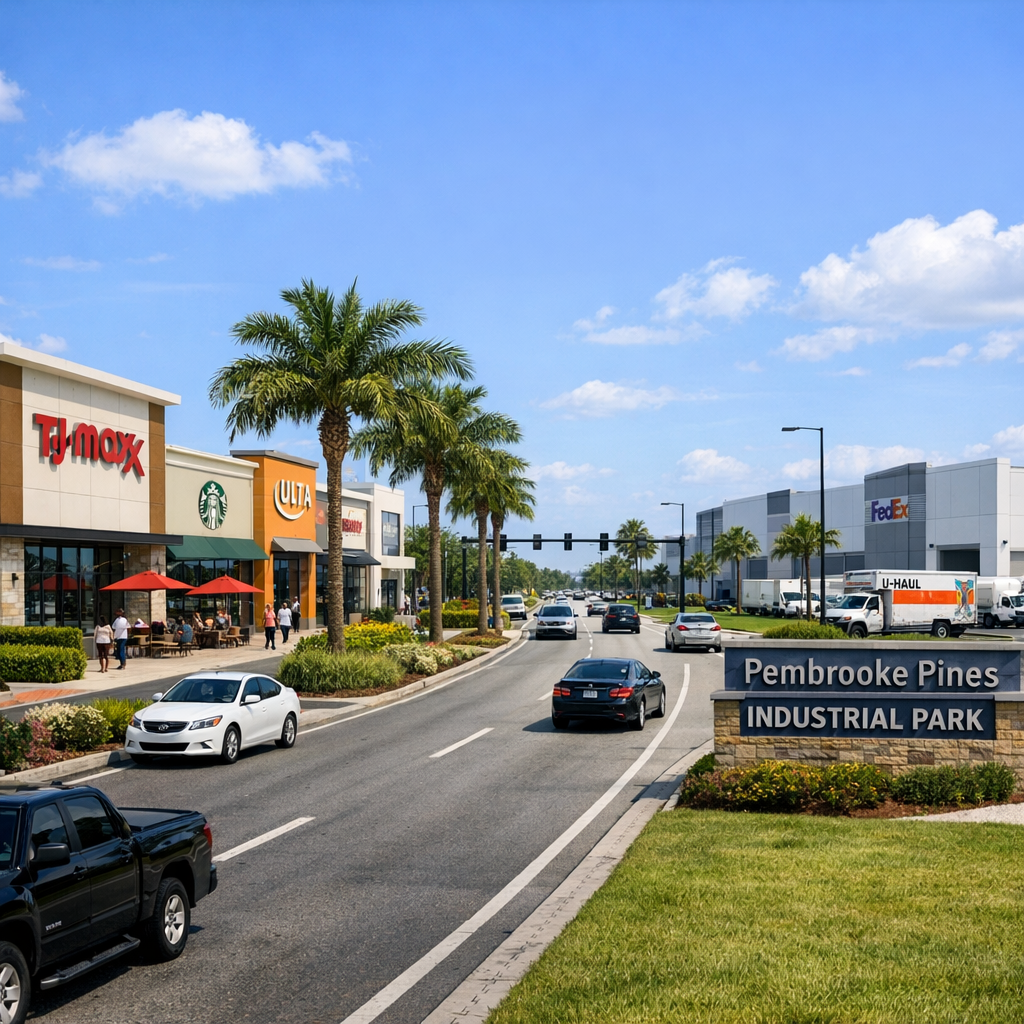
Several major developments are reshaping Pembroke Pines’ business landscape. A mixed‐use lifestyle center in City Center is expanding with national retailers and restaurants joining local spots, offering both space for new commerce and gathering places that enhance foot traffic. Meanwhile the South Florida Distribution Center—housed on the reclaimed Broward County Women’s Correctional Institute site—is boosting industrial capacity and repurposing underutilized land.
Strategic Planning for Growth
“We Love Pembroke Pines – A Blueprint for a Brighter Future,” the city’s multi‐year Strategic Plan, highlights economic development as a key focus area. Among included goals: recruiting new businesses in targeted industries, revitalizing underused commercial corridors, and supporting small local businesses so all parts of the city benefit from growth.
The city’s Economic Development Plan echoes that, calling for efforts to diversify the economic base—lessening dependency on retail—and to repurpose vacant or underused property.
Where Local Business Fits In
For small business owners, these developments open real possibilities:
- Faster permitting and online tools mean you can start operations with more predictability.
- Expanding industrial capacity—like in the South Florida Distribution Center—can create demand for services, supply chain roles, and facility needs.
- Commercial slots in major shopping centers and lifestyle centers continue to be added, offering space for local retail and dining concepts alongside larger brands.
The City Center project, for example, has attracted anchors like Publix, T-Mobile, and Smoothie King, with more tenants to come.
Looking Ahead: What Business Owners Should Track
If you’re running or planning a local business, here are some opportunities and challenges to watch:
- Location matters: East side parcels are often lots smaller and harder to assemble, making development trickier and more costly.
- Policy shifts: Land use codes, zoning rules, and strategic focus areas can reshape what’s possible—especially in underdeveloped corridors.
- Partnerships & incentives: The city seeks private developers to partner with for commercial revitalization and may offer financial tools or zoning flexibility where aligned with its goals.
Pembroke Pines may be approaching build‐out in many areas, but its business environment remains dynamic. With focused strategy, space for industrial use, and a government pushing for efficiency, this city is positioning itself to support both legacy businesses and new ventures ready to grow.